
We’re not just getting better at managing illness.
We’re getting better.
You may have been living with chronic illness for months. Or years. Maybe you have a diagnosis that explains some of what's happening. Maybe you've collected several diagnoses, none of which quite tells the whole story.
Either way, you've spent a way too much time trying to figure out how to feel better.
You've tried treatments, changed routines, learned what makes things worse, and gotten very good at calculating what your body can afford on any given day.
And somewhere along the way, managing your illness started taking up more and more of the life you were trying to get back.
But what if managing it isn't the best we can do?
If you feel like:
Everything takes energy now,
You can’t plan tomorrow because you never know how you’re going to feel,
Just getting excited about something makes you tired,
Some days you’re afraid you’ll never get your brain back,
and maybe worst of all….
You don’t really have dreams for your life anymore, now that illness has taken over,
then you’re in the right place.
Because I’ve been there.
Chronic Illness stole my thirties from me, and it wouldn't be an exaggeration to say I'm still a little pissed off. I'd gone from being on top of the world: just returned to Montana from living abroad for two years, killing it at the newspaper I owned, remodeling the adorable Victorian home my husband & I lived in,... I felt like everything I'd ever wanted was within my grasp in those months.
...enter mother-freaking Lyme Disease.
You know where this story goes...
I started getting sick with crazy symptoms nobody could explain: relentless fatigue, near-daily migraines, brain fog, food intolerances that seemed to pop up like mushrooms,...and nobody seemed to understand that it all had to be related. I felt like I was going crazy.
I finally went down for the count over the course of a single weekend, and ended up staring at the wall for most of the next three years, a period I now think of as my Zombie Years. After all that, when I ultimately hit bottom physically, I finally tried energy healing—and in 2012, I began learning how to work with my own body that way.
So,…yeah. It took ten years and the fear that I might actually be dying for me to try energy work.
When I started, I couldn't walk the two blocks to the post office without stopping to rest. Six months later, I hiked two miles up to one of my favorite backcountry lakes. It was a short hike, but it was brutal—and six months earlier I couldn't have imagined doing it.
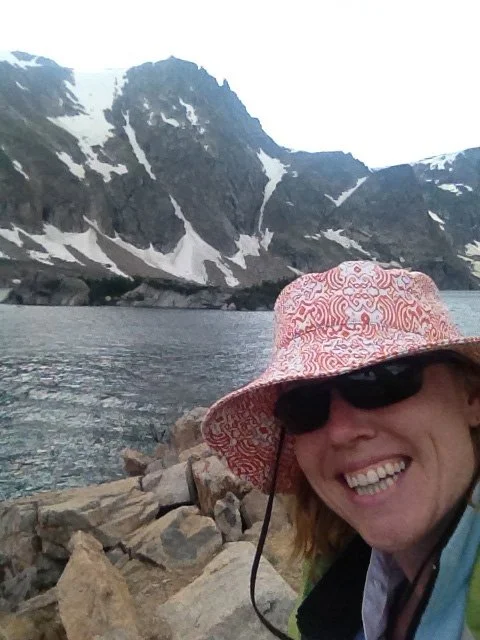
Glacier Lake, in the Absaroka-Beartooth Wilderness in Montana. A place I wasn't sure I'd ever see again.
I wasn't finished recovering. I spent the rest of that summer, and the months after it, rebuilding strength and finding out how much more my body could do. But somewhere in those six months, something that had limited my life for years had broken open.
And I became obsessed with understanding why.
Not just why I'd gotten sick. Why my body had done all those bizarre, contradictory, seemingly inexplicable things it had done along the way.
Why could I tolerate dairy one week and not the next? Why could doing practically nothing leave me flattened? Why did systems that were supposedly unrelated seem to rise and fall together? Why were some of the things that helped me nowhere on the list of things I was “supposed” to need?
I wanted to understand the body I'd just spent ten years trapped inside.
Fourteen years and many, many clients later, I'm still asking those questions.
I've just gotten a hell of a lot better at knowing where to look.
But what if the things that don't make sense actually fit together?
One of the things I've learned is that the place where something stops making sense can be our starting point. So when something doesn't fit, I get really curious:
—What really happened yesterday that might explain today’s crash?
—Could a single issue be affecting both your physical energy and your ability to look forward to dinner with friends?
—What else changed alongside this sudden new food intolerance?
I don't assume every weird thing your body does means something profound, and these questions don't always have simple answers. But even when I was sick, I couldn't shake the feeling that the things nobody could explain were connected somehow.
Fourteen years of working with other people's complicated bodies haven't made me any less curious about those connections. They've just given me evidence to keep following them.
And knowing where to look is only the beginning.
Finding a connection can be exciting, especially when you've spent years trying to make sense of symptoms that seem to have nothing to do with each other.
But understanding what's happening and being able to change it are two different things.
That's where my work as an energy healer comes in.
Whether it's Gloria, whose lifelong IBS finally cleared the f*** up, or Susan, who discovered how to use tools she'd known about for years to impact her own fatigue, or Melissa, who's slowly regaining the brainpower to read again…
These are the changes that make this work so meaningful to me.
Because when you've been sick for a long time, getting better isn't just about having fewer symptoms.
It's about having a life you can actually enjoy again.
So where do you want to go next?
If you're thinking, I'd like to understand more about how all of this works, there's plenty here for you to explore.
And if you're thinking, I wonder what energy healing could change for me, let's talk about what's happening in your body and whether working together makes sense.